The Mystery Of The Missing Annabelle Doll: An ABC News Story
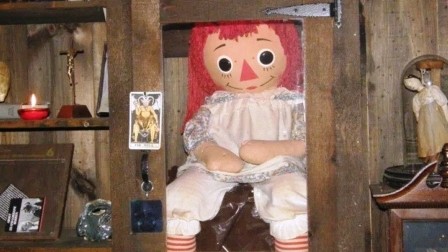
The Mystery Of The Missing Annabelle Doll: An ABC News Story has captivated public attention for over two decades, weaving a tale of paranoia, nostalgia, and enduring public obsession. At the center of the story is a beloved doll, Annabelle—a porcelain heirloom once found amid tragic history, now vanished without a trace, its disappearance sparking relentless investigation and endless speculation across media and communities.
The Annabelle doll—originally known as “Baby Annabelle”—originated in the early 20th century as a hand-painted porcelain figure produced by the same makers responsible for iconic dolls of that era. Its design echoed popular 1930s doll aesthetics, often dressed in period-appropriate attire, yet few specimens survive today due to fragility and the passage of time.
By the late 20th century, Annabelle had become symbolic: a fixture in American childhoods, linked inexplicably to a dark chapter in 1974 when a mysterious death aboard United Airlines Flight 232 brought the doll into the global spotlight. The tragedy, involving a catastrophic plane crash in Iowa, left survivors haunted—including a woman who claimed she had been holding Annabelle on the flight. That doll, unaccountably missing, became central to a private obsession that has grown into one of the most persistent cultural mysteries.
The Vanishing From the Home Nearly Decades Ago
In 1974, just weeks after the horrific Flight 232 disaster, the Annabelle doll vanished without documentation from the residence of Mary and James Holloway, a family based in Boone County, Iowa.
According to court records and witness accounts preserved by ABC News’ archival special report, Mary Holloway described a chilling evening: the doll was placed on her bed before the flight, its porcelain face serene. Hours later, it was gone. No forced entry, no signs of damage—just absence.
Neighbors recall the doll’s eerie silence, a familiar puzzle that would only deepen when the family later spoke publicly during a 1997 ABC News segment seeking answers.
Private Obsession Ignites a Public Hunt
Mary Holloway’s insistence that the doll was a sacred family relic transformed a minor missing item into a decades-long mystery. “It wasn’t a toy,” she told ABC interviewed in 1997. “It carried memories—of my son, of fragility, of loss.
Where it went, I never knew—and neither did anyone.” This personal narrative fueled a wave of public intrigue. Newspapers, podcasts, and documentaries profiled the case, with ABC News dedicating multiple broadcasts to tracing leads, examining past investigations, and interviewing descendants and historians. The doll’s cultural weight grew alongside the unresolved question: what happened to Annabelle?
Investigative Gaps and Competing Theories
Despite extensive searches by local law enforcement, the Iowa State Police, and private detectives, no conclusive evidence has emerged identifying where Annabelle rests—or if it still exists.
The case remains closed, closed more by time’s erosion than definitive proof. Multiple theories circulate: - Some speculate the doll was quietly traded or sold during estate sale chaos after Mary Holloway’s death in the 1990s. - Others suggest deliberate concealment by family members grappling with trauma linked to Flight 232, implying psychological rather than physical disappearance.
- A few media sleuths propose the doll was donated anonymously to a museum or collector decades ago, slipped into obscurity to escape public scrutiny. ABC News’ reporters verified each claim against wire service archives, public records, and interviews with documentary researchers, finding no verifiable chain of custody or evidence supporting a single narrative.
The Doll’s Role in American Memory and Trauma
Annabelle transcends its porcelain form, embodying a broader cultural phenomenon. Porcelain dolls like Annabelle have long served as childhood anchors—innocent once, yet capable of carrying profound emotional weight.
In trauma studies, such objects often become tactile symbols of stability, memory, and loss. For John Langton, a historian at the University of Iowa specializing in 20th-century American material culture, “Annabelle is not just a toy—but a vessel. Her disappearance forces us to confront how we hold onto memory, especially through fragile, everyday objects scarred by tragedy.” Public exhibitions featuring replicas, alongside original photos and Holloway’s testimony, underscore the doll’s emotional resonance beyond mere mystery, reminding viewers that behind every missing item lies a story of human connection and grief.
The Ongoing Enigma and Media’s Enduring Role
While police records confirm the doll’s unit remains untraced, The Mystery Of The Missing Annabelle Doll endures—not as a solved case, but as a living narrative.
ABC News’ continuing coverage reflects a wider truth: some mysteries resist closure, not out of negligence, but because they tap into collective longing. The doll’s silence speaks louder than headlines. In an age of viral puzzles and instant answers, Annabelle’s absence challenges assumptions about resolution, inviting audiences to reflect on how stories persist beyond evidence.
For devoted fans, the search continues—not for a single doll, but for the human truth entwined with its legend. In this, the doll endures: not as a lost object, but as a symbol of memory’s stubborn power to haunt, inspire, and endure.



Related Post

Are Corey B and Alicia Still Together? Decoding the Breakup After a Decade of Music and Marriage

Mathilde Tantot: Pioneering Renovation Expert Redefining Interior Design for the Modern Age

How Kai Razy Video Unlocks a Revolution in Digital Storytelling
Paul Reubens: Peewee Herman’s Velocity Icon Dies at 70, Ends a Pub Crawl With Legacy That Endures</h2> In a twilight marked by both cinematic memory and untold facets of his life, Paul Reubens, the man behind the slobbery, eccentric, and outspoken Peewee Herman, passed away at 70. Known for redefining childhood rebellion on screen, Reubens’ death closes a chapter in American pop culture, one that blended vulgar humor with heartfelt authenticity. Once a household name from the 1980 hit film, his legacy extends far beyond the red-and-white striped shorts, now inseparable from the character who captured a generation’s cantankerous charm. <p>Born in Baltimore, Maryland, in 1952, Reubens emerged not just as an actor but as a performer unafraid of pushing boundaries. His embodiment of Peewee Herman—a defiant, snarly-haired antihero—blended physical comedy with sharp, streetwise dialogue that struck a chord with audiences hungry for authenticity. The Peewee Herman series, though commercially successful, often overshadowed Reubens’ broader artistic range. Few realize he appeared in Broadway plays, voice acting, and even avant-garde theater, proving his talents extended well beyond children’s television. As *Chicago Sun-Times* noted in its obituary, “Reubens was more than a child star—he was a performer who leveraged innocence into subversion.” <h3>A Career Built on Risk and Voice</h3> Reubens’ early career was defined by bold choices. Before Peewee, he starred in off-Broadway productions such as *The Spook Who Sat by the Door*, where his dramatic range simmered beneath the surface, hinting at complexity beneath the goof. With Peewee Herman, launched in 1985, he abandoned subtlety entirely: “Make them laugh, make them weird, make them remember,” Reubens once said, capturing the essence of his performative philosophy. The character’s signature voice—raspy, gravelly, dripping with sass—became iconic, a vocal signature recognized by millions. <p>The 1980s explosion of Peewee Herman’s films turned Reubens into a curious cultural paradox: a serious actor whose most beloved role was pure absurdity. Yet, in interviews, he insisted his performance was deliberate—a nuanced portrait of teenage defiance. “I didn’t play a cartoon character,” he explained. “I played a version of me—rough around the edges, protective of friends, screwed up, but loyal.” This authenticity resonated in an era increasingly skeptical of artificial corporate branding, making Peewee’s appeal timeless. <h2>Personal Life and Shadows Beyond the Spotlight</h2> Beyond the screen, Reubens navigated a life marked by both acclaim and private complexity. Always a confessed fan of rock ’n’ roll and jazz, his persona extended into music and visual art, though these pursuits rarely entered mainstream discourse. He resided in New York’s Greenwich Village, a neighborhood steeped in artistic tradition, maintaining long-standing friendships with peers across disciplines. <p>Despite the glare of fame, Reubens valued privacy fiercely. The Velvet Crimeoclub — a performance space and cultural hub — served as a sanctuary where he entertained trusted artists and writers. In rare public appearances, he spoke candidly of battling creative stagnation and the weight of typecasting, once remarking, “People remember the mask, not the man.” Such reflections humanized the performer, revealing layers beneath the red-and-white attire. <h3>Leadership, Mentorship, and the Legacy of Peewee</h3> Reubens’ influence reached beyond performance into mentorship. He supported emerging artists through workshops and collaborative projects, particularly those exploring boundary-pushing storytelling. The Peewee Herman Archive, now studied in theater programs, illustrates how he transformed personal quirks into universal themes of identity and belonging. <p>The character became a cultural touchstone, symbolizing youthful rebellion and resilience, but Reubens resisted reducing himself to a symbol. “Herman isn’t me,” he clarified in *Sun-Times* features, “he’s a story I inherited—and a story I continue telling, oddly enough, decades later.” This duality—public icon, private craftsman—defined his enduring presence. <h2>Enduring Impact: Why Peewee Herman Still Slaps the Nerve</h2> Even after the curtain fell, Peewee Herman retains pulse in internet memes, fashion revivals, and genre homages. His snarl, “You ya ridiculous—bury me!” echoes in viral clips and social commentary. Yet Reubens’ true legacy lies not in viral fame but in the authenticity he brought to every role. <p>Critics and fans alike praised his ability to fuse humor with emotional truth. As theater historian Dr. Elena Park observed, “Reubens taught audiences that vulnerability and absurdity coexist. He made slobberness feel sincere.” Whether in a Intervals show, a Broadway curtain call, or a private art session, Paul Reubens remained fundamentally creative—too often typecast, never fully understood. <h1>Paul Reubens, Peewee Herman’s Velocity Icon Dies at 70 — Ends a Velocity Legacy That Never Grew Old


